
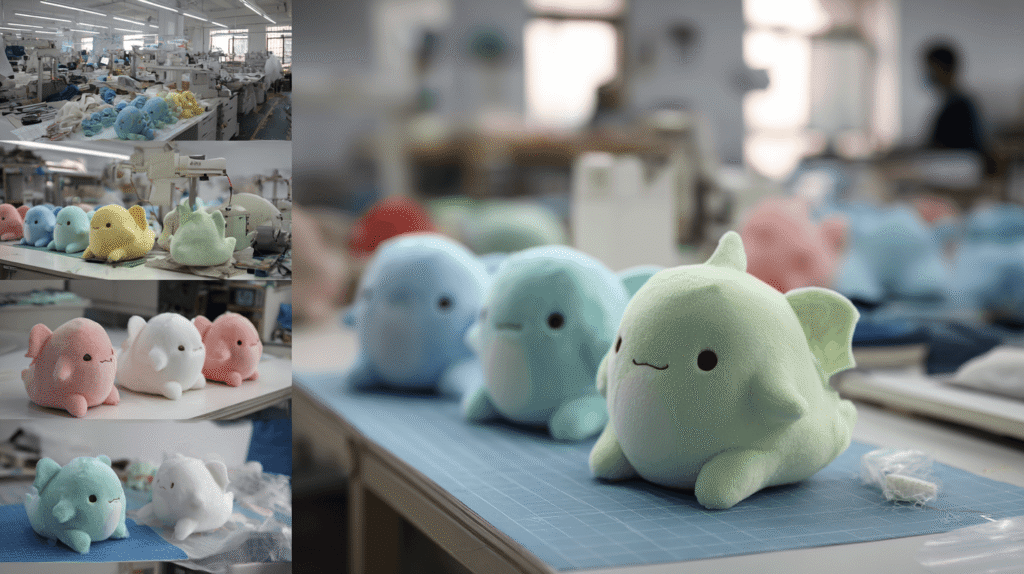
When people think about plush toys, they usually focus on the fabric. But in reality, what’s inside the toy matters just as much.
The filling determines how a plush toy feels, how it holds its shape, and even how it performs in safety and durability tests.
In this guide, we’ll break down the most common stuffing materials used in plush toys—and help you choose the right one for your project.
1. PP Cotton (Polyester Fiberfill)
PP cotton is the most widely used filling material in the plush toy industry.
It is made from polyester staple fibers (including solid and hollow fibers), giving it a soft and fluffy texture.
Key features:
- Good resilience and shape recovery
- Soft and smooth touch
- Lightweight and warm
- Cost-effective
Best for:
- Most standard plush toys
- Bulk production with cost control
Why it’s popular: PP cotton offers the best balance between price, softness, and performance, which is why most plush toy manufacturers use it by default.
2. Washed Cotton
Washed cotton is treated to create a softer texture and a slightly wrinkled, “natural” look.
Although it is more commonly used in fabrics, it can also be used in certain plush products.
Key features:
- Soft and comfortable feel
- Stable material (less shrinking or fading)
- Natural, slightly textured appearance
Best for:
- Lifestyle plush products
- Decorative or fabric-heavy designs
3. Down Cotton (Microfiber Filling)
Down cotton is made from ultra-fine synthetic fibers designed to mimic natural down. It is also known as silk cotton or hollow cotton.
Key features:
- Extremely soft and delicate
- Even distribution inside the toy
- Good warmth and comfort
- Premium feel
Limitations:
- Higher cost than standard PP cotton
- Can lose shape if not properly structured
Best for:
- High-end plush toys
- Pillow-style plush products
4. Plastic Pellets (Weighted Filling)
Plastic pellets are often added in specific areas of a plush toy rather than used as the main filling.
Key features:
- Adds weight and stability
- Helps toys sit or stand upright
- Improves hand feel
Common usage:
- Inside feet or bottom of toys
- Balance support for display
Important: Always ensure pellets meet safety standards, especially for children’s products.
5. Foam Particles
Foam particles (sometimes called micro foam beads or “snow particles”) are a newer type of filling material.
Key features:
- Lightweight and flexible
- Excellent cushioning and shock absorption
- Good elasticity and recovery
Best for:
- Plush cushions
- Stress-relief or ergonomic toys
Advantages over traditional foam:
- More durable
- Less prone to breaking or deformation
How to Choose the Right Filling for Your Plush Toy
Choosing the right stuffing depends on your product goals:
| Requirement | Recommended Filling |
|---|---|
| Cost efficiency | PP cotton |
| Premium softness | Down cotton |
| Structural stability | Plastic pellets (combined) |
| Cushion or pillow feel | Foam particles |
| Natural or lifestyle design | Washed cotton |
Conclusion
Plush toy fillings directly affect comfort, durability, cost, and product positioning.
- PP cotton remains the industry standard
- Down cotton offers a more premium feel
- Pellets and foam materials add function and structure
For brands and importers, choosing the right filling is not just a technical decision—it’s a product strategy decision.
Work with a Reliable Plush Toy Manufacturer
At FUToys, we help B2B clients choose the right materials based on budget, target market, and product positioning. From standard PP cotton to premium fillings, we ensure every toy meets your quality and safety expectations.
Have a project in mind? Send us your design—we’ll recommend the best filling solution for your product.
