
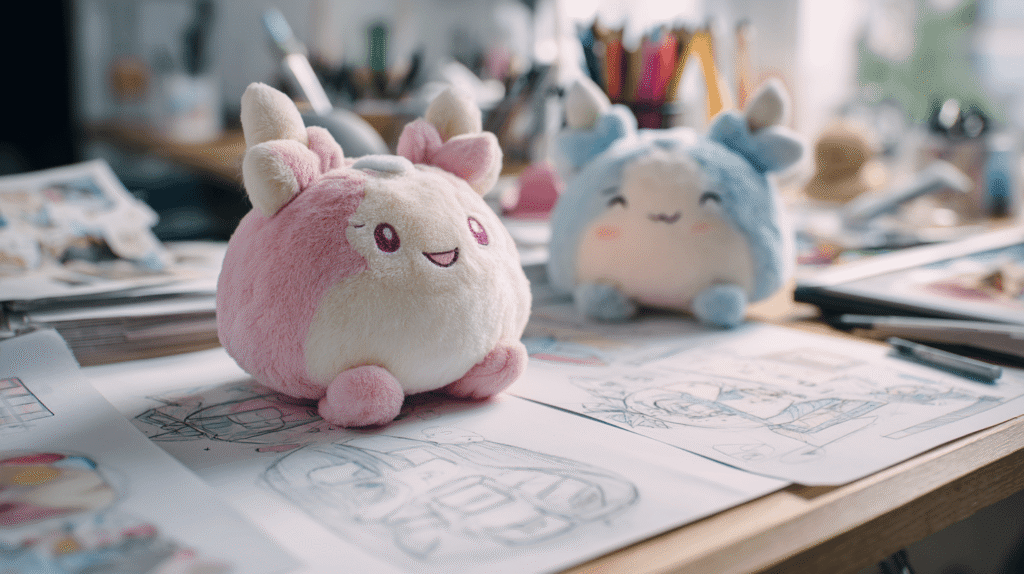
When sourcing custom plush toys, one of the most common questions buyers ask is:
“How long will production take?”
The answer is not always simple. Plush toys are highly customized products, and the timeline depends on many factors—from sample development to final shipment.
In this guide, we break down the full production timeline, so you know what to expect and how to plan your order.
Overview: The Full Process
A typical custom plush toy project follows these steps:
- Sampling (idea to prototype)
- Sample confirmation & quotation
- Order confirmation (contract details)
- Mass production
- Inspection
- Shipment
Each step affects your final delivery time.
1. Sampling: The Most Critical Step
Sampling is the starting point of everything.
A good sample means:
- The design matches your idea
- The product fits your target market
- The production process is feasible
There are two main types of samples:
A. Based on Existing Products
You modify an existing design (fabric, color, size, etc.).
Advantages:
- Faster development
- Higher success rate
- Easier communication
B. Fully Custom Design (New IP or Artwork)
You create a product from scratch.
Challenges:
- No physical reference
- Differences between 2D design and 3D plush result
- Requires more communication and revisions
Important: Sampling usually takes 2–10 days, but fully custom designs may take longer.
2. Detail Confirmation: The Key to Smooth Production
This step ensures everything is clear before mass production starts.
A. Design & Shape
The bulk production will follow the approved sample. No major changes should happen after this stage.
B. Fabric
Many plush toys use custom fabrics. Of course, custom fabric production also requires time, typically around 14–30 days, depending on the quantity and whether it is peak or off-season.
After fabric production, a pre-production sample (PPS) is often provided for final approval.
C. Labels (Care Label & Woven Label)
Labels must comply with your target market regulations.
If you are new to plush toys, your supplier should guide you on:
- Safety information
- Material composition
- Required warnings
D. Packaging
Good packaging protects the product during long shipping.
⚠️ For sea shipment:
Avoid vacuum packing when possible. It may deform the toys and affect appearance.
Also, optimized carton size helps:
- Maximize container space
- Reduce shipping cost per unit
E. Testing & Certifications
Different markets require different standards:
- US: ASTM F963, CPSIA
- EU: EN71, CE
All are designed to ensure product safety.
Tip: Confirm testing requirements early to avoid delays.
3. Mass Production
Once everything is confirmed, production begins.
Typical production time:
- 30–60 days (depending on quantity and complexity)
Factors that affect timing:
- Order quantity
- Design complexity
- Material availability
- Factory schedule
4. Inspection (Quality Control)
Before shipment, quality must be checked.
Inspection includes:
- Product quality vs approved sample
- Workmanship and consistency
- Quantity verification
Options:
- Third-party inspection (e.g., SGS, BV, TÜV, Intertek…)
- Buyer’s own inspection team
- Factory internal QC
Inspection is essential to avoid problems after shipment.
5. Shipment & Payment
After inspection approval, goods are shipped.
Shipping options:
- Sea freight (most common)
- Air freight (faster but more expensive)
Shipping cost can fluctuate, so suppliers usually help choose the most cost-effective option.
Typical Total Lead Time
For a new custom plush toy order:
- Sampling: 2–10 days (or longer for complex designs)
- Production: 30–60 days
- Shipping: depends on destination (e.g., 20–50 days by sea)
👉 Total: around 8–12 weeks or more
How to Reduce Production Time
Here are some practical tips:
- Start with clear design references
- Confirm all details early
- Avoid changes after sample approval
- Plan orders ahead of peak seasons
- Work with experienced suppliers
Important: First Order vs Repeat Orders
The first order always takes longer because:
- Sample is not finalized
- Many details need confirmation
For repeat orders or simple modifications:
👉 Production time can be significantly shorter
Conclusion
Custom plush toys are not off-the-shelf products.
They require time, coordination, and clear communication.
From sampling to shipment, every step matters.
If you plan your timeline properly, you can:
- Avoid delays
- Control costs
- Launch your product on time
Work with an Experienced Plush Toy Manufacturer
At FUToys, we help clients manage the full process—from idea to delivery.
We provide:
- Fast and reliable sampling
- Clear production timelines
- Professional quality control
Have a project in mind? Send us your design—we’ll give you a clear timeline and production plan.
