
A practical guide for importers and brands
Finding a reliable plush toy manufacturer isn’t just about price—it’s about avoiding problems before they happen.
Late delivery, inconsistent quality, or poor communication can easily turn a good project into a frustrating one. The good news is: most of these risks can be identified early, if you know what to look for.
Here’s a simple, practical guide based on real sourcing experience.
1. Don’t Focus Too Much on Factory Size
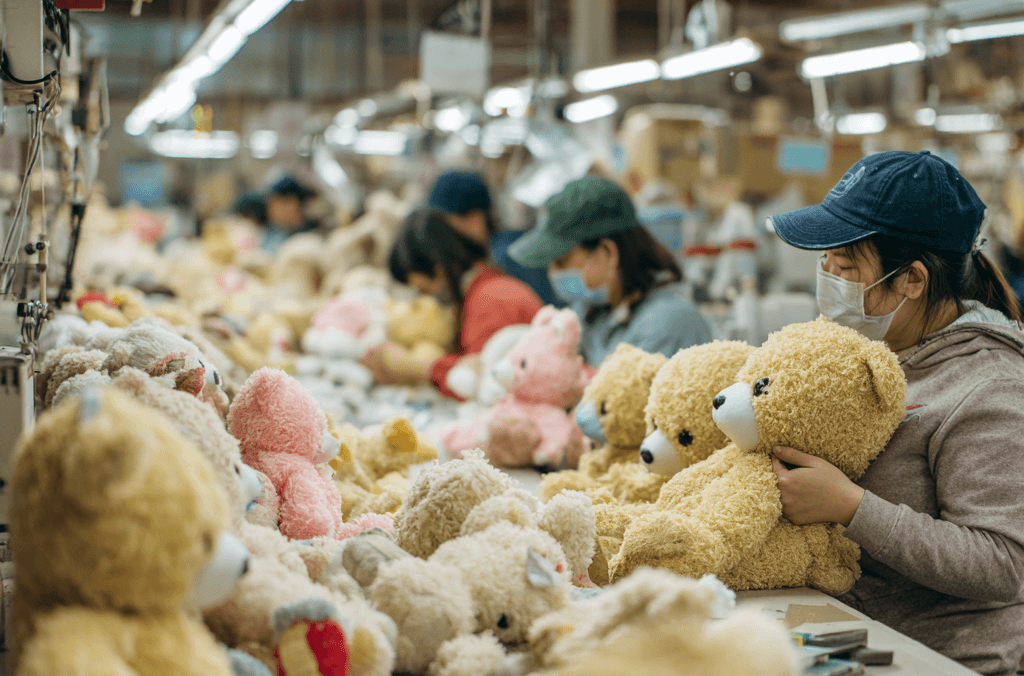
Plush toys are still a labor-intensive product.
Most factories have between 20 and 150 workers, and even well-known brands often work with small to mid-sized manufacturers. Fully automated production is still rare in this industry.
So instead of asking “Is this a big factory?”, ask:
- Do they have a stable team?
- Do they handle export orders regularly?
- Is their quality consistent?
In many cases, a smaller but experienced factory will perform better than a large but poorly managed one.
2. Certifications Are a Basic Requirement
If a factory is exporting to the US or Europe, they should have at least one recognized audit:
- BSCI
- SEDEX
- ISO 9001
These aren’t just formalities.
Many retailers and importers require compliance reports before placing orders. If a supplier cannot provide any certification, it’s worth taking a closer look before moving forward.
3. Make Sure They Actually Produce
Online, it’s not always clear whether you’re talking to a factory or a trading company.
That’s not necessarily a problem—but transparency matters.
A real manufacturer should be able to show you:
- Production lines
- Sewing and stuffing processes
- Quality inspection area
- Packing section
A quick video call can often tell you more than dozens of emails.
4. Visit the Factory (or Ask for a Live Tour)
If your order is significant, visiting the factory in person is always the best option.
It helps you:
- Understand how they operate
- Communicate more efficiently
- Build trust quickly
If traveling isn’t practical, a live video tour is still very useful. It allows you to see real conditions and ask questions on the spot.
5. Trade Show Experience Is a Good Sign
Factories that attend international exhibitions—like the Canton Fair—are usually more established.
Exhibiting requires:
- Investment
- Preparation
- Qualification
While both factories and trading companies participate, the key point is this:
They are actively looking for long-term business and are less likely to be unreliable.
6. Pay Attention to Communication
This is often overlooked, but it matters a lot.
Before placing an order, notice:
- How quickly do they respond?
- Do they clearly understand your requirements?
- Do they ask questions or just say “yes” to everything?
Good communication early on usually means fewer problems later.
7. Always Start with a Sample
Skipping samples is one of the most common mistakes.
A proper sample helps you confirm:
- Materials
- Workmanship
- Size and proportions
- Details like embroidery or printing
Many production issues can be avoided at this stage. If a supplier pushes you to go straight to bulk production, it’s better to slow down and review carefully.
8. Understand MOQ (and Flexibility)
MOQ often depends on:
- Fabric sourcing
- Custom design complexity
- Production setup
A professional supplier will explain the reason behind the MOQ—and may offer solutions, such as adjusting materials or combining designs.
This kind of flexibility usually comes from experience.
9. Ask How They Handle Problems
No production process is perfect.
What matters is how the supplier responds when something goes wrong.
You can simply ask:
- What happens if there’s a quality issue?
- How do you handle delays or defects?
Clear and direct answers are a good sign of a reliable partner.
10. Don’t Choose Based on Price Alone
Price is important—but it should not be the only factor.
Unusually low prices often come with hidden risks:
- Lower quality materials
- Unstable production
- Poor working conditions
In many cases, saving a small amount upfront can lead to bigger losses later.
Final Thoughts
Choosing the right partner takes a bit of time, but it’s worth it.
Focus on:
- Transparency
- Communication
- Sampling process
- Real production capability
A good plush toy manufacturer won’t just produce your product—they’ll help you avoid problems and grow your business over time.
Need Support with Your Project?
If you’re working on a custom plush toy project and need a second opinion, we’re happy to help.
You can share your idea, design, or requirements—we’ll review it and get back to you with practical suggestions within 24 hours.
